Friday, September 10, 2010

Mind Disorders May Be Better Understood With a 'Brain Atlas'

Human Brain
Hoping to create a brain atlas, a researcher at Tel Aviv University is building on a previously developed tool to understand how different parts of the human brain "connect".

Dr. Yaniv Assaf of Tel Aviv University’s Department of Neurobiology is collaborating with an international team of
scientistsBrain reserchers already know that autism and schizophrenia are not localized disorders - there is no one place in the brain they can be found.

That’s why a brain atlas will be an invaluable resource for understanding how parts of our brain connect to other parts within, leading to a deeper understanding of these diseases.

"It’s currently impossible for clinicians to ’see’ subtle disorders in the brain that might cause a life-threatening, devastating disability," said Assaf. For the study, Assaf looked at clusters of brain
wiring, or axons, to help scientists produce a better working map of the brain for future research.

Assaf’s
tool can look at larger groups of multiple axons and collect information from the group itself, information which measures the velocity and flow of information within the brain.


Thursday, September 9, 2010

Lift Stem Cell Funding Ban, US Govt Asks Court

Testing on Lift Stem Cell
The US government asked a federal appeals court to lift a court order blocking federal funding for research involving human embryonic stem cells. US District Judge Royce Lamberth's order causes "direct and immediate" harm to federally-funded embryonic stem cell research and "potentially blocks life-saving medical advances," Obama administration lawyers told a federal appeals court in Washington.

On Tuesday, Lamberth rejected the White House's request to drop his order to temporarily block federal funding for embryonic stem cell research pending an appeal of the decision. Lamberth first issued his injunction on August 23, ruling in favor of a coalition that included several Christian organizations by saying that stem cell research involved the destruction of human embryos.

He said the federal funding, which Obama had authorized, violated the Dickey-Wicker amendment, a federal law barring federal tax funds from being used to fund any research that would cause human embryos to be destroyed. That decision prompted the White House to say it would seek ways to keep the "life-saving" research going.

Obama's March 2009 decision to reverse the ban on federal funds research on embryonic stem cells was lauded by many researchers who believe the field has huge potential for treating serious diseases, including Alzheimer's, Parkinson's and diabetes. It came after his predecessor George W. Bush had banned federal funding for research on new stem cells for moral and religious reasons. The research is fiercely opposed by religious conservatives, who believe that life begins at conception, because it involves the disposal of embryos.


Transplant Doctors Protest at Philippine Airline's Refusal to Carry Donated Kidney


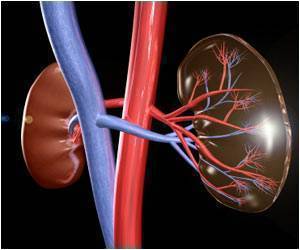
Kidney
Philippine doctors had to throw away a donated kidney after a local airline refused to fly it, transplant doctors said Thursday. Cebu Pacific Air said it was protecting passengers from possible infection or contamination when it refused to allow the team who harvested the organ to carry the Kidney in the cabin on the flight last month.

Benjamin Balmores, president of the Philippine Society of Nephrology (PSN), said the kidney could no longer be used after doctors instead tried to drive it nearly 400 kilometres (250 miles) to its destination. "According to NKTI (the government-run National Kidney and Transplant Institute), this is the first time that the team was not allowed to hand-carry the human organ," Balmores told AFP.

Cebu Pacific said it offered to carry the kidney on priority cargo, but the doctors declined because the organ was too fragile. Candice Iyog, a spokeswoman for the airline said: "The way (the kidney) was packed was not in accordance with prevailing internationally accepted standards." Balmores, whose group represents the country's kidney doctors, urged airlines to commit to a set of guidelines on transporting harvested human organs.

"It seems there is no standard policy nor a consistent implementation of such policy as seen in the past experience of the National Kidney and
Transplant Institute retrieval team," he said. Health Secretary Enrique Ona confirmed the incident, and said the government needed to educate airlines about the importance of organ transplants.


New Therapies for Chronic Pain Possible With Novel Discovery

Patient suffering with Chronic Pain
A major mechanism underlying the development of tolerance to chronic morphine treatment discovered by Mount Sinai researchers might lead the way for new therapies to treat chronic pain. Developing tolerance towards morphine after chronic administration is a hurdle in pain management, but it also poses other problems, such as addiction and  constipation.


Now researchers have identified how they can block this tolerance to treat pain with fewer side effects. Lakshmi Devi and her colleagues found a protein complex that excessively accumulates in areas of the brain that process pain - which may be the cause of the development of morphine tolerance.

Their next step would be to develop a
drug that prevents this process by blocking individual receptors from signalling the analgesic response to morphine.

"We look forward to studying the behaviour of similar receptor complexes in diseases like obesity, alcohol-induced
liver fibrosis, and neuropathic pain itself," said Devi. The findings are published in the July 20th issue of Science Signaling.

Wednesday, September 8, 2010

Swine Flu Poses No Serious Threat Than Seasonal Flu: Study

Study on Swine Flu
Infection rom the 2009 A(H1N1) pandemic virus presented a lower risk of serious complications than other recent strains of the flu, according to US research presented Tuesday. Analysis of influenza cases in the midwestern US state of Wisconsin showed infected individuals were younger than in earlier strains, but complications were not as likely as with the H3N1 virus that arose in the 2007-2008 flu season, said researchers at Wisconsin's Marshfield Clinic Research Foundation.


"The pandemic 2009 influenza A(H1N1) virus caused widespread transmission in the United States and other countries," noted lead author Edward Belongia and colleagues in the September 8 issue of the Journal of th
e American Medical Association(JAMA).According to Centers for Disease Control and Prevention (CDC) estimates, the United States saw 43 million to 89 million infections from April 2009 to April 2010, "with mid-range estimates of 274,000 H1N1-related hospitalizations and 12,470 deaths," including seasonal and pandemic strains, said the study. 

However in its localized study in the state, researchers compared the characteristics of pandemic and seasonal influenza infections occurring in that defined population, drawing from a pool of 6,874 patients in three flu seasons starting in 2007. Researchers identified 545 H1N1 pandemic influenza cases in 2009, and 221 cases of the seasonal H1N1 flu, and 632 patients with H3N2 infection from the 2007-2008 season. Children, which the 2009 H1N1 pandemic infection appeared to disproportionately affect, were not associated with more hospital admission or pneumonia cases when compared with seasonal H1N1 or H3N2, said the study.

Obesity Due to High-fat Diet Hastens Leukemia Risk: Study

Obesity Due to High-Fat
Obesity caused due to fatty diet can directly speed up the progression of acute lymphoblastic leukemia (ALL), according to a study at The Saban Research Institute of Childrens Hospital Los Angeles.Obesity has been associated with an increased incidence of many cancers, including leukemia, but it has been unknown whether the increase in incidence was a direct effect of obesity or associated with genetic, lifestyle,health, or socio-economic factors.

"Given the high prevalence of obesity in our society, we felt it was critical to determine if obesity actually caused the increased incidence of leukemia and not some other associated exposure," explained Dr. Steven D. Mittelman, a pediatric endocrinologist who led the study.The researchers used a high-fat diet to induce obesity in two mouse models of ALL. Mice were randomized to a high-fat or a control diet.

The investigators found that obesity increased the risk of ALL in both models, particularly in older mice.The finding was consistent with the type of cumulative effect seen with other exposure-related cancers, such as lung cancer related to smoking and breast cancer resulting from increased estrogen exposure.

US Judge Denies to Lift Ban on Stem Cell Fund

Testing Labouratory
 
A US federal judge denied Tuesday the White House's request to drop his decision to temporarily block federal funding for embryonic stem cell reserch pending an appeal of the decision."In this court's view, a stay would flout the will of Congress," Judge Royce Lamberth wrote in his order."Congress remains perfectly free to amend or revise the statute. This court is not free to do so."

Lamberth first issued his injunction on August 23, ruling in favor of a coalition that included several Christian organizations by saying that stem cell research involved the destruction of human embryos.He said the federal funding, which President Barack Obama had authorized, violated the Dickey-Wicker amendment, a federal law barring federal tax funds from being used to fund any research that would cause human embryos to be destroyed.That decision prompted the White House to say it would seek ways to keep the "life-saving" research going.

In Tuesday's order, Lamberth said the Obama administration was "incorrect about much of their 'parade of horribles' that will supposedly result from this Court's preliminary injunction."Obama's March 2009 decision to reverse the ban on federal funds research on embryonic stem cells was lauded by many researchers who believe the field has huge potential for treating serious diseases including Alzheimer's, Parkinson's and diabetes.It came after his predecessor George W. Bush had banned federal funding for research on new stem cells for moral and religious reasons.

Tuesday, September 7, 2010

UK regulators want Avandia diabetes pill pulled


Avandia diabetes pill

GlaxoSmithKline's controversial diabetes pill Avandia should be pulled from the U.K. market because of concerns that the drug can increase the risk of heart attacks, British drug regulators said Monday.The Medicines and Healthcare products Regulatory Agency (MHRA) said an independent panel of experts had advised it that the risks of Avandia outweigh its benefits, and that the drug should no longer be sold in Britain. The body said it had sent a letter to doctors in July advising them to consider alternative treatments.

The British Medical Journal also called for the immediate withdrawal of the drug, saying it should never have been licensed in the first place.Avandia was approved by the European Medicines Agency in 2000 to help lower blood sugar levels in patients with type 2 diabetes. The drug is currently under review in Europe and the U.S., and European regulators are scheduled to meet Wednesday to decide Avandia's future.GSK maintained that its extensive research involving over 50,000 patients has showed that Avandia does not increase the overall risk of heart attack, stroke or death compared to other diabetes drugs.

"We continue to believe that Avandia is safe and effective when it is prescribed appropriately," the London-based company said in a statement.But the British Medical Journal was critical of both GSK's research methods and the European approval process, outlining what were described as multiple problems associated with Avandia's safety in a report published Monday.

In the U.S., the Food and Drug Administration has placed Avandia under scrutiny since 2007, when a study suggested that patients taking the drug were 43 percent more likely to experience heart attack than those taking other diabetes drugs or no diabetes medication.

Lack of Sleep May Put Young Kids At Risk of Obesity

Childhood Obesity
Children under the age of five who don't get enough sleep at night are more likely than kids who do get their 40 winks to become obese at a young age, a study published Monday showed. "We found a robust longitudinal association between duration of night time sleep in early life and subsequent obesity measured at five to nine years," wrote the authors of the study in the Archives of Pediatric and Adolescent Medicine, a journal of the American Medical Association.


Researchers led by Janice Bell of the University of Washington, Seattle and Frederick Zimmerman of the University of California, Los Angeles, studied two lots of data -- at baseline and five years later -- for 1,930 children in the United States. The kids were separated into two groups for the study: ages zero to 59 months, and five to 13 years. The data analyzed included information known to influence whether a child develops obesity, including parents' weight and the child's physical activity level, as well as how long the children slept at night and whether they napped during the day.

On average, younger children in the study slept 10 hours a night, and older children slept around 9.5 hours, but some children in both age cohorts got as little as five hours' sleep a night. The data collected five years after baseline showed that 33 percent of the younger cohort and 36 percent of the older cohort of kids were overweight or obese.

Backstabbing Bacteria Ditch Colleagues and Actually Lessen Infection

Backstabbing Bacteria

Backstabbing bacterial cells that act in their own interests and do not cooperate with their infection-causing colleagues can actually reduce the severity of infection. The selfish behaviour of these uncooperative bacteria could be exploited to treat antibiotic-resistant infections, according to research being presented at the Society for General Microbiology's autumn meeting today.


Bacteria work together by using a well-studied communication system called Quorum Sensing (QS). During infection, bacteria talk to each other using QS to coordinate the release of toxins. Researchers at the University of Nottingham have discovered that in Staphylococcus aureus infections, bacteria defective in QS can benefit from 'opting out' of toxin production. By doing so, they can invest more energy in reproducing - whilst taking advantage of the nutrient-rich infection that is maintained by their neighbours.

By looking after themselves in this way, QS-deficient bacteria are quickly able to outnumber other bacteria that are busy producing toxins. As a result the overall severity of infection is reduced as fewer toxins are produced. "This opens up the interesting possibility of using these uncooperative bacteria to treat infection," said Eric Pollitt who is presenting the study.


Design by Free WordPress Themes | Bloggerized by Lasantha - Premium Blogger Themes | Macys Printable Coupons